apricity painting

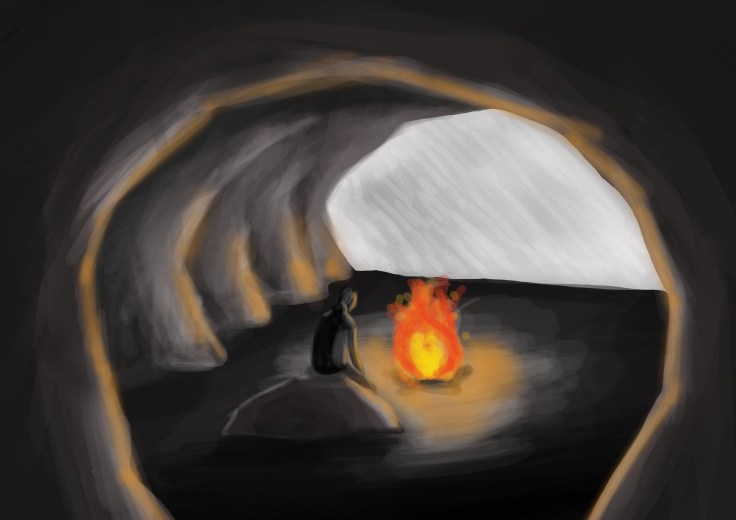
This artwork is one of my experiments for the keyword project and even though it doesn’t look that good, in my opinion, it’s interesting, because unintentionally, I managed to make it look like a crayon or pastel drawing, even though it was made in Photoshop. I’m not particularly proud of it, because, even though, it doesn’t look that bad, it’s still not something I intended to illustrate. The good side about this though, is that now I have this knowledge and I can recreate it next time when I make something similar.  It opened my eyes in a way, since the realisation hit me, that if you’re skilled enough digitally, you can make even the digital painting look like it was made with traditional methods and that blows my mind.

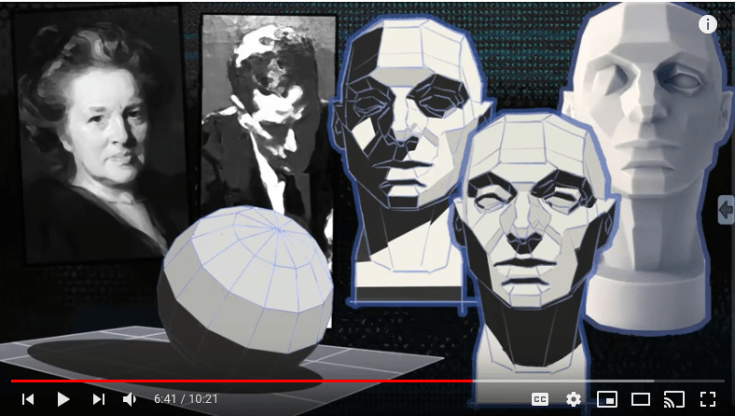
While I’m on the topic of videos, here’s another person, who helped me improve on more technical side of drawing, aka. the lighting and shadows. It’s a 10 minute video that goes over the basics of shadows, light and explains in terms that any beginner can understand. Instead of the usual approach tutors take when trying to teach, he makes it easier to absorb by making the mood lighthearted, but still professional. He also shortens the time to 10 minutes, instead of 2-3 hour videos that go over the same topic, so it’s not as intimidating to watch, which is something anyone can appreciate. Still, when it comes to Dave or this guy, Dave seems more casual and more fun to listen and learn from, but here it’s more technical and you can learn the theory part, which can also be pretty useful to know.

Screen Shot 2018-12-20 at 14.17.34

Marco Bucci. (2018). Light and Shadow – 10 Minutes To Better Painting – Episode 6. [Online Video]. 29 March 2018. Available from: https://www.youtube.com/watch?v=xcCJ2CU-bFw&t=0s&index=2&list=PLbcywHdwkAlhjfvjpmQ0QY8_GzjoJiFxP. [Accessed: 13 December 2018].

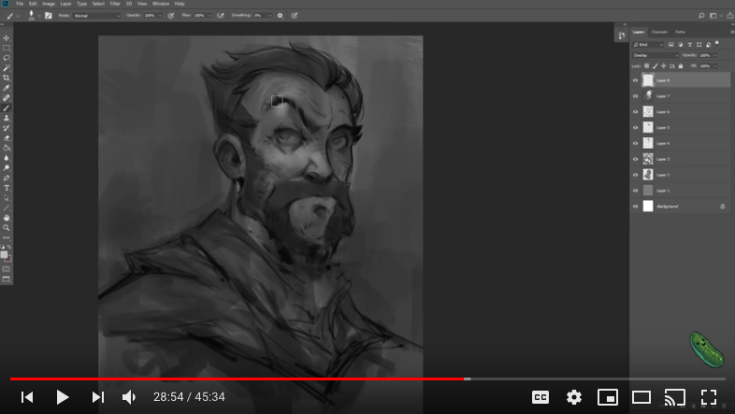
While looking for some videos that could help me draw better on Youtube, I found a guy named Dave Greco, who’s an artist and a game developer, and he’s been doing concept art for 14 years professionally. He has a lot of videos, which tackle the topic of drawing, but this video in particular caught my eye. The way Dave drew his drawing on the video was really intriguing and fresh to me. The way I drew my drawings was vastly different, so it felt like that video opened new doors for me and I’ve noticed a big improvement on my art, when I started doing the same thing he does.

Screen Shot 2018-12-20 at 14.06.11

Dave Greco. (2018). Character Concept Art Tutorial. [Online Video]. 17 May 2018. Available from: https://www.youtube.com/watch?v=2tMagqFKQ9E&index=3&t=525s&list=PLbcywHdwkAlhjfvjpmQ0QY8_GzjoJiFxP. [Accessed: 14 December 2018].

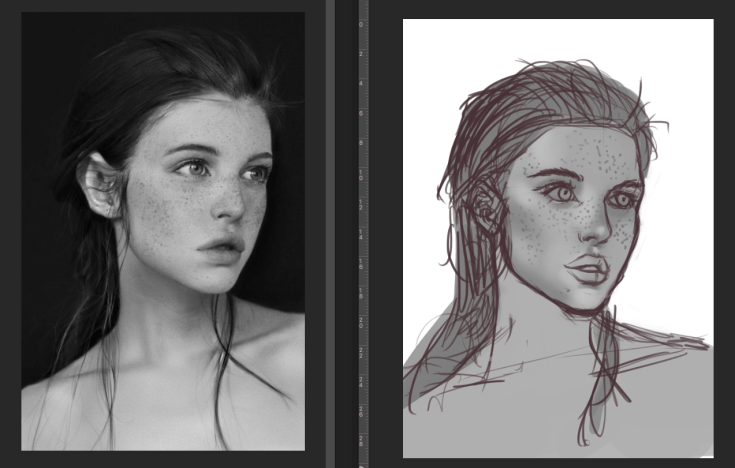
The topic for this post will be an unfinished digital drawing of mine. Couple of weeks ago I set myself a goal to draw every single day and to improve, so these past days I’ve been just drawing realistic images, using various references and one of those images is what I want to talk about. I can say for certain, that my ability to draw faces is getting quite decent , but there’s one challenge I can’t seem to overcome just yet. The challenge is drawing lips from any angle that’s not straight, so this type of study is great for overcoming that. This practice also taught me that having a sketch with all the details helps so much when it comes to digital painting, because before finding this little piece of info my sketches and drawings used to be so much messier. On top of that, my understanding of how light and shadows work are incomparably better to how it used to be before I started drawing so frequently. Another thing that kind of hit me unexpectedly, is that how can you hope to get good at lighting and shading, if you don’t have a solid understanding and basics of drawing.

Screen Shot 2018-12-20 at 15.46.23

As you can see, there’s still a ton of things to improve on, but I’m fully aware of that and trying to work on it.

Masters of Poster Design

Compared to the others book I mentioned on my posts, this one is bit different. Last year we had a lot of briefs for poster designs, so I thought it would be smart if I actually read up a bit about it in preparation for this year, so I’m ready to make a highest mark worthy poster if need comes to be. What I really like about this book, is that you can, just like other books I mentioned, see different types of designs, so they aren’t confined to just one style, which I think is great. As some person said ‘Variety is the spicy of life’, which totally fits to this book. Another massive plus , the author approaches the topic in a playful manner, so it doesn’t feel like your regular school textbook, it actually interests you and before you know it, you get absorbed into it.

Foster, J., 2012. Masters of Poster Design. 1st ed. United States of America: Rockport publishers.

Hand to Eye

This is yet another book that I look at for artistic inspiration, but in this case, it’s more related to what I’m actually passionate and interested about, which is Illustration. This book features tons of contemporary illustrations, that range from simple character sketches, to very strange pieces that make you question the artist’s thinking. When you open the book, you can also find artworks, made with different methods. You want traditional sketches? Yup, it has those. What about designs made digitally? Absolutely. So, all in all, it’s a great book to look at, when you want to clear that artist’s block.

Hyland, A., 2003. Hand to Eye. 1st ed. London: Laurence King.

Concept art

On this post I’d like to talk about website, that talks about something I’m interested in and that I draw inspiration from. http://www.bigbadworldofconceptart.com, which is a website that talks all about the concept art. I find it helpful, because if you have any question related to concept art, it can be answered there. After seeing a particular post on that website, my way of seeing things changed and I want to talk about it. The post talks about how to motivate yourself to draw if you are someone, who’s lazy like me, so in my eyes, this is golden material. Basically, there are 4 points to the formula: 1. You have to wake up earlier or go to sleep later and spend that time drawing, so you have that little extra time you can spend on honing your craft. 2. You have to reduce the amount of time you spend on TV or playing video games, which is fair, since at this day and age, we all spend too much time on those. 3. Ignoring distractions when you are busy, that way you’ll get into a habit of focusing on work. Lastly, 4. Replacing your phone with a sketchbook. Don’t worry, not literally. If you have 5 minutes to spare, instead of checking your phone, get your sketchbook out, it’s as simple as that. It might sound sounds like common sense, but I tried to follow those 4 points, and what do you know, it actually works if you commit to it.

Eliott Lilly. 2018. Tips to keep drawing. [ONLINE] Available at: http://www.bigbadworldofconceptart.com. [Accessed 13 December 2018].

Graphic Design Now

‘Graphic Design Now’ is a book I often look at for inspiration, when I need to design something, since you can find any kind of design, ranging from illustrations, to logos, to photography and even packaging design, so it has something to offer for everyone. The author talks about the the graphic design as a whole, explores the origins of interesting design, while trying to explain artists thought process to the reader. It’s an interesting read for sure, but the thing I get absorbed into the most are the illustrations. Usually, these kinds of books show you only the design from the older days of the industry, but this one is special. It actually shows you designs from both old times and modern times, so you can see and compare how the design trends have changed.

Fiell, C. and P. , (2015). Graphic Design Now. 1st ed. Cologne, Germany. TASCHEN

The Digital Canvas

I’d like to share a really helpful design help and it comes from a book called ‘The digital canvas’ by Jonathan Raimes. It’s a book that, essentially, shows you the basics of digital painting and the software functions. I find it quite interesting because even when you think you know most of the things about digital painting, you can still find something new and totally fresh that you didn’t know before and it makes you happy in a way, that you’re glad that you found the book and decided to take a look.  The book also features a brief history of digital art, an easy to comprehend hardware description, software and many other things that any beginner (and a veteran) digital artist could learn and pick up fairly quickly.

Raimes, J., 2006. The Digital Canvas. 1st ed. New York: Abrams.

Another industry that I’m interested in and currently studying for is graphic design. Graphic designers create and combine symbols, images and text to convey visual representations of ideas and messages. They use typography, visual arts and page layout techniques to create designs. Most common uses of graphic design include corporate design (logos and branding, editorial design (magazines, newspapers and books), web design, packaging and many more. It’s an interesting industry, because there are so many branches within it, that anyone who has skills can find a place they belong to with their particular skill set. Also, after doing some research about the industry, I found something that was pretty interesting. Apparently the origins of graphic design can be traced all the way from the origins of human existence, which is quite surprising and cool.

Blog at WordPress.com.

Up ↑

Design a site like this with WordPress.com
Get started